Disney+ Catalogs by Country: Why Your Library Looks Nothing Like America's
The same subscription opens wildly different libraries in the US, UK, Japan and Australia. Here is exactly what changes in 2026 — verified exclusives, real prices, ESPN tiers, and how to switch regions step by step.

vpnrank.io is reader-supported: we may earn a commission if you buy through links in this article. This never affects our rankings.
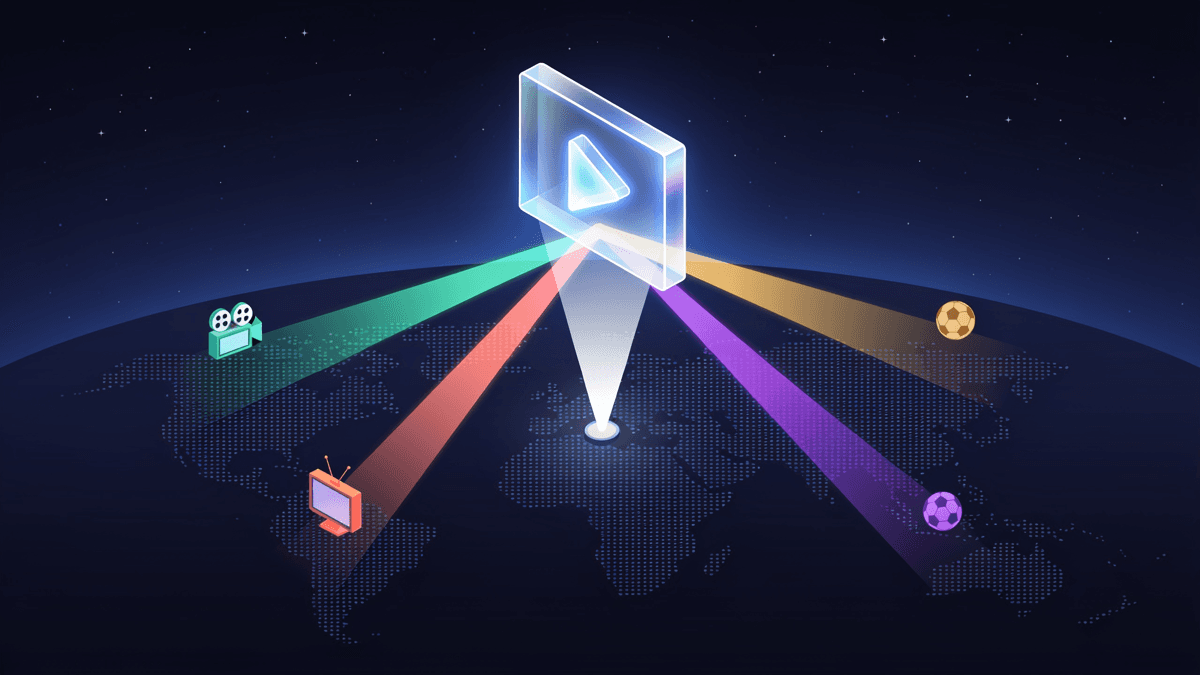
Disney+ sells itself as one global service, but the app you open in London, Tokyo or Sydney is a genuinely different product from the American one — different shows, different prices, different sports. This guide maps exactly what changes between countries in 2026, with verified examples, current pricing per market, and a step-by-step method for switching libraries with a VPN.
Why the same login opens a different Disney+ in every country
The short answer is licensing. Disney owns most of what it streams, but it sold distribution rights market by market for decades before Disney+ existed — and it still deliberately splits its own general-entertainment output between Disney+ and Hulu inside the United States. The result is that your subscription travels with you, but your library does not.
Three forces shape what you see when you open the app. The first is legacy licensing: a 20th Television series or an FX drama may be locked to a local broadcaster or a rival streamer in a given country until an old contract expires, so Disney simply cannot show it there. The second is brand architecture: in the US, Disney keeps the family-focused Disney+ separate from Hulu, its adult-skewing general entertainment service, while everywhere else those same shows are folded directly into Disney+ as a hub. The third is regulation and local strategy — the European Union, for instance, requires streaming catalogs to carry at least 30 percent European works, which pushes Disney to license extra local content in EU markets that Americans never see.
The size gap is real and measurable. Catalog trackers such as What's On Disney Plus have consistently found that Australia, New Zealand, the United Kingdom, Ireland, Canada and Singapore carry the largest Disney+ libraries — comfortably over 2,000 titles each — while the United States has the most TV series of any market but, counter-intuitively, one of the smallest film selections. An American tourist opening the app in Sydney sees hundreds of movies and shows their home subscription has never offered.
From Star to Hulu: the 2025 rebrand that redrew the map
You cannot understand today's Disney+ catalogs without the October 2025 rebrand. Disney retired Star — the general-entertainment hub bolted onto international Disney+ since February 2021 — and replaced it with Hulu, converting a US-only brand into Disney's global banner for grown-up drama, comedy, FX series and adult animation. The content mostly stayed; the map changed.
The switch happened on October 8, 2025 across Europe and most other markets, and on October 9 in Australia and New Zealand. If you open Disney+ in the UK, Canada, Germany or Brazil today, the tile that used to say Star now says Hulu, and it contains broadly the same mix: FX prestige dramas, 20th Television library staples like Grey's Anatomy and Family Guy, and international originals. One country kept the old branding: Japan. There, "Hulu" is a completely separate, unrelated streaming service owned by broadcaster Nippon TV, so Disney+ Japan retained its Star hub to avoid a trademark collision.
Meanwhile the United States runs the opposite model. Hulu remains a separate subscription, surfaced inside Disney+ only as a hub for people who pay for both services or a bundle. Disney has confirmed that the standalone Hulu app will be fully absorbed into Disney+ during 2026 — though both will still be sold as separate plans. The practical consequence for viewers is striking: an American household pays for two services to get a catalog that a British or Australian subscriber gets inside one, while Hulu's US-only licensing means some of that content still never appears on American Disney+ at all.
US vs UK vs Australia vs Japan: what actually differs
Put the four flagship markets side by side and the differences stop being trivia and start being buying decisions. Each version of Disney+ has a distinct catalog shape, its own pricing ladder and, since 2026, a different relationship with live sport. Here is how the big libraries compare in practice.
United States
The US app is the family-brand version: Disney, Pixar, Marvel, Star Wars, National Geographic and The Simpsons, plus an ESPN tile for sports and a Hulu hub that only unlocks with a bundle or separate Hulu plan. Because Hulu carries the general-entertainment load, US Disney+ on its own has the thinnest movie catalog of the major markets. Since October 21, 2025 it costs $11.99 a month with ads or $18.99 for ad-free Premium — the third US price rise in three years, and one of the most expensive versions of the service anywhere.
United Kingdom and Ireland
UK Disney+ is one of the richest versions: the full family catalog plus the Hulu hub included in every plan, spanning FX and 20th Television shows that Americans need a Hulu subscription to watch. The Bear's fifth and final season landed on Disney+ in the UK on June 26, 2026, a day after its US debut — where the show streams on Hulu, not Disney+. Grey's Anatomy, Only Murders in the Building and Tell Me Lies follow the same pattern. The famous gap runs the other way too: Doctor Who streams on Disney+ almost everywhere on Earth, but in the UK and Ireland it belongs to BBC iPlayer, so British subscribers don't get it on Disney+ at all.
Australia and New Zealand
Australia routinely tops catalog-size rankings, with well over 2,000 titles blending the family brands and the full Hulu hub. It is also where pricing moved most recently: in April 2026 Disney raised the Standard plan to AU$17.99 a month (AU$179.99 a year) and Premium to AU$24.99 (AU$249.99 a year), while softening the blow with a new AU$9.99 Standard with Ads tier — the first ad-supported option Australians have had.
Japan
Japan is the outlier three times over. It kept the Star hub name because Nippon TV owns the local Hulu. It leans heavily into anime, with Disney+ carrying simulcasts and Japanese dramas that other regions get later or never. And even after a March 2026 price rise it remains one of the cheapest developed markets: ¥1,250 a month for Standard or ¥1,670 for Premium, with annual plans saving over 16 percent — roughly half what Americans pay for the equivalent ad-free tiers at current exchange rates. Japan also produces inverse exclusives: the final Bleach: Thousand-Year Blood War chapter, The Calamity, streams on Disney+ in most of the world from July 25, 2026, but in Japan it airs on TV Tokyo and streams across local platforms such as Prime Video and Netflix — every major service except Disney+.
Canada, Latin America and India in brief
- Canada mirrors the UK model — full Hulu hub, 2,000-plus titles — and consistently ranks among the largest libraries, at a lower price than the US.
- Latin America is the sports powerhouse: after Star+ merged into Disney+ in mid-2024, the Premium plan there includes ESPN's live channels, meaning football rights that no US or European Disney+ plan carries.
- India technically has no Disney+ app at all anymore. Disney+ Hotstar merged into JioHotstar in February 2025, so Disney content in India lives inside a joint-venture platform with its own pricing and its own enormous cricket catalog.
Regional exclusives you can verify right now
Abstract claims about "different libraries" are easy to make, so here are concrete, checkable examples current as of mid-2026. Each of these is a title that sits on Disney+ in some countries while being absent — or on an entirely different service — in others. Search for them yourself in two regions and watch the results diverge.
- The Bear — all five seasons stream on Disney+ in the UK, Australia and most international markets; in the US the show is a Hulu exclusive, visible inside the Disney+ app only through the Hulu hub with a bundle. Season 5 dropped on Hulu on June 25, 2026 and on Disney+ UK a day later.
- Only Murders in the Building — a Hulu original in the US; season 5 streams inside Disney+'s Hulu hub in the UK, Europe and Australia.
- Grey's Anatomy — hundreds of episodes on Disney+ internationally; in the US the streaming home is Hulu, not Disney+.
- Shōgun and Alien: Earth — FX's two biggest recent swings follow the standard split: Hulu in the US, Disney+ everywhere else.
- Futurama — the revival seasons are Hulu originals in the US and Disney+ titles abroad.
- Doctor Who — the 2024–25 seasons stream on Disney+ in nearly every country except the UK and Ireland, where BBC iPlayer holds the rights; the spin-off The War Between the Land and the Sea, which aired on BBC One in December 2025 and closes out the Disney deal, follows the same split — though its promised Disney+ international release had still not materialised as of mid-2026.
- Bleach: Thousand-Year Blood War — The Calamity — from July 25, 2026: Hulu in the US, Disney+ in most international markets, and in Japan a TV Tokyo broadcast whose streaming is spread across local services like Prime Video and Netflix — everywhere except Disney+. One show, three homes, depending on where you stand.
This pattern repeats across thousands of titles, which is why checking availability before you travel — or before you subscribe — matters. Our Can I Watch finder answers exactly this question for specific shows, sports and regions in a few seconds.
What Disney+ costs around the world in 2026
Disney+ pricing has diverged as sharply as the catalogs. Two US price rises in as many years, a fresh Australian increase in April 2026 and back-to-back hikes in Japan have stretched the gap between the most and least expensive markets to more than four-fold on a currency-adjusted basis. Here is the current ladder.
- United States: $11.99/month with ads; $18.99/month for ad-free Premium (since October 21, 2025). No annual discount on the ad tier.
- United Kingdom: £5.99 Standard with Ads; £9.99 Standard; £14.99 Premium — with annual plans effectively giving twelve months for the price of ten (£99.90 and £149.90).
- Australia: AU$9.99 Standard with Ads; AU$17.99 Standard; AU$24.99 Premium after the April 2026 increase.
- Japan: ¥1,250 Standard; ¥1,670 Premium — among the lowest big-market prices, with over 16 percent further savings on annual billing.
- Mexico and Latin America: ad-supported plans from around MXN 139–149, with Premium — ESPN's live channels included — at MXN 339 after a May 2026 rise; live sport bundled in for roughly the price of a US subscription that includes no sport at all.
- Cheapest markets overall: independent price trackers consistently place Turkey, Brazil and Japan at the bottom of the global table, with Turkish pricing working out near $4–5 a month at street exchange rates.
Two caveats before anyone gets ideas. First, prices move constantly — we track live pricing across markets in our VPN Price Index, and the pattern there holds for streaming too: headline prices change several times a year. Second, a VPN changes what you can watch, not what you pay. Your billing country is fixed by your payment method and the store you subscribed through, so connecting to a Turkish server does not re-price an existing American subscription. Signing up fresh in a cheap market generally requires a local payment method, and Disney has tightened this steadily.
ESPN on Disney+: three different sports products under one name
Sport is where regional differences stop being about catalogs and start being about entire product categories. Depending on your country, "ESPN on Disney+" means a premium American mega-bundle, a Latin American football pipeline, or a brand-new curated channel that did not exist before April 2026. Same brand, three unrelated offerings.
In the United States, ESPN relaunched as a full direct-to-consumer service in 2025: ESPN Unlimited costs $29.99 a month standalone, and the Disney+, Hulu, ESPN Unlimited bundle runs $35.99 with ads or $44.99 with ad-free Disney+ and Hulu. Subscribers with an ESPN-inclusive plan get a live ESPN tile inside the Disney+ app itself — the closest thing yet to Disney's long-promised all-in-one streamer.
In South America, ESPN has lived inside Disney+ since the Star+ merger in 2024: the Premium plan carries ESPN's linear channels and exclusive live events. For the 2026 FIFA World Cup, ESPN confirmed that Disney+ Premium subscribers in Argentina, Chile, Colombia, Ecuador, Peru, Uruguay and Venezuela get 30 matches — including both semi-finals and the final, plus every match of the local national team. If you are following the tournament across borders, our World Cup 2026 streaming guide maps every broadcaster.
Europe and Asia-Pacific joined last. On April 8, 2026, ESPN launched inside Disney+ across 53 additional countries — taking the sports brand to roughly 100 markets. European subscribers get NBA and NHL games from the 2026–27 seasons, college sports including the College Football Playoff, and the 30 for 30 documentary library; Japan, Korea, Singapore, Taiwan and Hong Kong start with curated English-language programming. It is the first time most of these markets have had any live sport inside Disney+ at all.
How to switch your Disney+ region with a VPN, step by step
Disney+ decides which catalog to serve almost entirely from your IP address: open the app on a network that looks British and you get the British library, including the Hulu hub. A VPN gives you that IP deliberately. The process takes about five minutes the first time and seconds thereafter.
- 1Choose a VPN with a strong streaming track record and servers in your target country — Disney+ actively blocks data-center IP ranges, so free or low-grade services fail far more often than they succeed.
- 2Install the app on the device you actually watch on. Phones, laptops and Fire TV sticks are straightforward; for Apple TV and smart TVs, either use the platform's native VPN app or run the VPN on your router.
- 3Connect to a server in the country whose library you want — London for the UK catalog with the Hulu hub, Tokyo for Japan's Star hub and anime lineup, Sydney for Australia's oversized library.
- 4Fully close the Disney+ app, clear its cache (on mobile) or your browser cookies (on desktop), then reopen it. Disney+ caches your region aggressively, and a stale session is the number-one reason the old catalog lingers.
- 5Sign in as normal. Your account, profiles, watchlist and progress all carry over — only the catalog changes.
- 6Search for a region-marker title to confirm the switch: The Bear appearing on Disney+ means you are outside the US; Doctor Who appearing means you are outside the UK and Ireland.
- 7If streams buffer in 4K, test a few different servers in the same city — throughput varies more between servers than between providers. Our VPN speed test data shows which services hold up at UHD bitrates.
One honest caveat: Disney's subscriber agreement prohibits circumventing geographic restrictions, so while VPN use is legal in most countries, it is against the terms of service and the theoretical remedy is account action — in practice, enforcement against paying subscribers has been through IP-blocking rather than bans. You are watching content you pay for; you are simply watching it from a different doorway.
ExpressVPN is the most consistent performer in our Disney+ region tests — it reliably opens the UK, Australian and Japanese catalogs, its Lightway protocol sustains 4K without buffering, and the router app covers Apple TV and smart TVs in one setup.
See our top-ranked VPNs →Troubleshooting: when the catalog will not switch
Disney+ runs one of the more competent VPN-detection operations in streaming, so occasional friction is normal even with a premium provider. Almost every failure comes down to one of six causes, and all six have quick fixes you can work through in order — from most to least likely.
- Error code 73 or a "not available in your region" message means Disney+ has flagged your IP as a proxy. Disconnect, pick a different server in the same country, and reload — blocklisted IPs are usually server-specific, not provider-wide.
- The old catalog keeps showing even though the VPN is connected: force-quit the app, clear the app cache or browser cookies, and sign in again so Disney+ re-detects your location from scratch.
- A DNS leak lets your real location slip out through your ISP's DNS servers even while the VPN tunnel is up. Run a leak test and enable your VPN's own DNS — our DNS leak explainer covers the two-minute check.
- A WebRTC leak does the same thing inside browsers: Chrome and Firefox can expose your true IP via WebRTC requests unless the VPN blocks them. See our WebRTC leak guide for browser-specific fixes.
- IPv6 traffic bypassing the tunnel is an underrated culprit: if your VPN only tunnels IPv4, Disney+ may see your real IPv6 address. Enable IPv6 leak protection or disable IPv6 on the device.
- Smart TVs and consoles without native VPN apps often keep using your ISP's hardcoded DNS. Run the VPN at router level, or use your provider's smart-DNS feature configured to the target region.
If none of that works, the server range you are using has likely been mass-flagged — contact your VPN's support chat and ask which servers currently work with Disney+ in your target country. Good providers rotate IP ranges weekly precisely because of this cat-and-mouse cycle, and support teams keep live lists.
The fine print: what a VPN can and cannot change
A VPN moves your apparent location, and with Disney+ that is enough to swap the entire catalog — but it is worth being precise about the limits. Your subscription tier, billing currency, and hub entitlements are set by your account's home country, and some content is fenced off by more than geography.
Content from Hulu and ESPN are only available to stream in the United States and its territories. — Disney+ Help Center
That help-center line cuts both ways. An American connecting to London gets the international Hulu hub because it is part of the UK Disney+ product — no extra subscription needed. But a British subscriber connecting to New York does not suddenly get US Hulu originals or the ESPN tile, because those require separate US plans attached to a US-billed account. Region-switching is powerful for catalogs and useless for entitlements. For the broader picture of which VPNs handle Disney+, Netflix and the rest most reliably — including our live unblocking test results — see our full guide to the best VPNs for streaming. The libraries will keep drifting apart as licensing deals expire and sports rights fragment; the tooling to move between them, fortunately, keeps getting better.
Frequently asked questions
Why is my Disney+ library different when I travel abroad?
Disney+ reads your IP address every time you open the app and serves the catalog licensed for that country — your account settings don't override it. Your profiles, watchlist and viewing progress follow you, but titles licensed only for your home market disappear and local exclusives appear. A VPN reverses this: connect to a server back home and your normal library returns.
Which country has the biggest Disney+ library in 2026?
Catalog trackers consistently rank Australia, New Zealand, the UK, Ireland, Canada and Singapore at the top, each with well over 2,000 titles, because their Hulu hub folds general entertainment into the main app. The US has the most TV series overall but one of the smallest film catalogs, since Hulu carries much of Disney's adult-skewing content as a separate subscription.
Is it legal to use a VPN with Disney+?
In most countries, yes — using a VPN is entirely legal, and streaming with one is not a criminal matter. It does breach Disney's subscriber agreement, which prohibits circumventing geographic restrictions, so the theoretical risk is account action. In practice, Disney enforces through IP-blocking (error 73) rather than banning paying customers. VPN use remains restricted in a handful of countries such as China and Russia.
Will a VPN change how much I pay for Disney+?
No. Your price is fixed by your billing country — determined by your payment method and the store you subscribed through — not by where you connect from. A VPN changes the catalog you see, nothing more. Subscribing fresh in a cheaper market like Turkey or Brazil generally requires a local payment card or gift card, and Disney has progressively tightened those loopholes.
What happened to the Star hub on Disney+?
Disney retired the Star brand on October 8, 2025 (October 9 in Australia and New Zealand) and rebranded the hub as Hulu across all international markets except Japan, where an unrelated Nippon TV-owned service already uses the Hulu name. The content — FX dramas, 20th Television shows, adult animation — largely carried over; only the branding and some navigation changed.
Does Disney+ include live sports outside the US?
Increasingly, yes. In South America, the Premium plan has included ESPN's live channels since the 2024 Star+ merger, including 30 matches of the 2026 World Cup. On April 8, 2026, ESPN launched inside Disney+ across 53 more countries in Europe and Asia-Pacific, adding NBA and NHL from the 2026–27 seasons, college sports and the 30 for 30 library. In the US, live ESPN requires a bundle with ESPN Unlimited or Select.
Why did Disney+ stop working with my VPN (error 73)?
Error 73 means Disney+ identified your IP address as belonging to a VPN or proxy and refused to serve the regional catalog. It is almost always server-specific: disconnect, choose a different server in the same country, clear the app cache and reload. If every server fails, check for DNS, WebRTC or IPv6 leaks exposing your real location, or ask your provider which servers currently pass Disney+ checks.
The best VPNs of 2026, ranked
Now you know how — here are the VPNs we recommend, independently tested and ranked for speed, streaming, privacy and value. Any of them works for everything in this guide.

ExpressVPN Ultra fast & secure. Great for privacy, downloads, and everyday browsing on all your devices. 24/7 live chat support.
ExpressVPN Ultra fast & secure. Great for privacy, downloads, and everyday browsing on all your devices. 24/7 live chat support.

IPVanish Fast speeds with unlimited device connections. Strong no-logs privacy and 24/7 live chat support. Great for families.

IPVanish Fast speeds with unlimited device connections. Strong no-logs privacy and 24/7 live chat support. Great for families.

NordVPN Excellent speeds with one of the largest server networks. Strong security features and easy-to-use apps. 24/7 live chat support.
NordVPN Excellent speeds with one of the largest server networks. Strong security features and easy-to-use apps. 24/7 live chat support.

Proton VPN Swiss-based VPN with strong privacy focus. Audited no-logs policy and open-source apps. Great for privacy-conscious users.
Proton VPN Swiss-based VPN with strong privacy focus. Audited no-logs policy and open-source apps. Great for privacy-conscious users.

CyberGhost Fast speeds and strong privacy tools. Simple apps, automatic WiFi protection, and 24/7 live chat support.
CyberGhost Fast speeds and strong privacy tools. Simple apps, automatic WiFi protection, and 24/7 live chat support.

TotalVPN Affordable VPN with strong privacy and reliable speeds. Easy-to-use apps for all major devices. No-logs policy.
TotalVPN Affordable VPN with strong privacy and reliable speeds. Easy-to-use apps for all major devices. No-logs policy.

Private Internet Access High-speed VPN with a large server network and advanced security settings. Ad blocker included and 24/7 live chat support.
Private Internet Access High-speed VPN with a large server network and advanced security settings. Ad blocker included and 24/7 live chat support.
Surfshark Unlimited device connections at a budget-friendly price. Includes ad blocker and strong privacy tools. Great value for money.
Surfshark Unlimited device connections at a budget-friendly price. Includes ad blocker and strong privacy tools. Great value for money.
Rankings are based on our independent testing methodology. We evaluate speed, privacy, security features, and value for money. We may earn affiliate commissions from links on this page, which helps fund our testing — this does not influence our rankings.