
Best VPN for the 2026 World Cup
Updated 2 July 2026- All 104 matches — broadcaster map for the US, UK, Australia, EU & more
- Keep your home coverage working while traveling to the USA, Mexico & Canada
- Free coverage exists: BBC/ITV (UK), SBS (Australia), NOS (Netherlands)

In short: The 2026 World Cup is the first 48-team, three-nation tournament (USA, Mexico, Canada), running 104 matches over about 39 days from June 11 to July 19. Rights are split country by country, so a reputable VPN with UK or Australian servers lets travelers keep their home coverage and lets others reach the free BBC/ITV and SBS feeds. Reaching a broadcaster outside its territory breaks its terms of service, and BBC iPlayer also needs a UK TV licence.
Dates
11 June – 19 July 2026
Teams
48 teams · 12 groups
Hosts
USA · Canada · Mexico (16 cities)
Free to watch
UK (BBC/ITV) · Australia (SBS)
Final
19 July · MetLife Stadium, NJ

ExpressVPN Ultra fast & secure. Great for privacy, downloads, and everyday browsing on all your devices. 24/7 live chat support.
ExpressVPN Ultra fast & secure. Great for privacy, downloads, and everyday browsing on all your devices. 24/7 live chat support.
IPVanish Fast speeds with unlimited device connections. Strong no-logs privacy and 24/7 live chat support. Great for families.
IPVanish Fast speeds with unlimited device connections. Strong no-logs privacy and 24/7 live chat support. Great for families.

NordVPN Excellent speeds with one of the largest server networks. Strong security features and easy-to-use apps. 24/7 live chat support.
NordVPN Excellent speeds with one of the largest server networks. Strong security features and easy-to-use apps. 24/7 live chat support.
Proton VPN Swiss-based VPN with strong privacy focus. Audited no-logs policy and open-source apps. Great for privacy-conscious users.
Proton VPN Swiss-based VPN with strong privacy focus. Audited no-logs policy and open-source apps. Great for privacy-conscious users.

CyberGhost Fast speeds and strong privacy tools. Simple apps, automatic WiFi protection, and 24/7 live chat support.
CyberGhost Fast speeds and strong privacy tools. Simple apps, automatic WiFi protection, and 24/7 live chat support.

TotalVPN Affordable VPN with strong privacy and reliable speeds. Easy-to-use apps for all major devices. No-logs policy.
TotalVPN Affordable VPN with strong privacy and reliable speeds. Easy-to-use apps for all major devices. No-logs policy.

Private Internet Access High-speed VPN with a large server network and advanced security settings. Ad blocker included and 24/7 live chat support.
Private Internet Access High-speed VPN with a large server network and advanced security settings. Ad blocker included and 24/7 live chat support.
Surfshark Unlimited device connections at a budget-friendly price. Includes ad blocker and strong privacy tools. Great value for money.
Surfshark Unlimited device connections at a budget-friendly price. Includes ad blocker and strong privacy tools. Great value for money.
Rankings are based on our independent testing methodology. We evaluate speed, privacy, security features, and value for money. We may earn affiliate commissions from links on this page, which helps fund our testing — this does not influence our rankings.
Our Top Choice
ExpressVPN Ultra fast & secure. Great for privacy, downloads, and everyday browsing on all your devices. 24/7 live chat support.
ExpressVPN Ultra fast & secure. Great for privacy, downloads, and everyday browsing on all your devices. 24/7 live chat support.
Why You Need a VPN for the 2026 World Cup
The 2026 FIFA World Cup (11 June – 19 July) is the biggest ever: 48 teams, 104 matches, 16 host cities across the USA, Mexico, and Canada, ending with the final at MetLife Stadium on 19 July. Broadcast rights are split country by country — FOX and Telemundo in the US, BBC and ITV in the UK, SBS in Australia, MagentaTV/ARD/ZDF in Germany, M6/beIN in France, Rai/DAZN in Italy — and every streaming platform geo-blocks to its home country. That creates two problems a VPN solves: travelers (including the millions visiting the host countries for the tournament) lose access to the coverage they pay for at home the moment they cross a border, and viewers in countries where most matches sit behind a paywall can't reach the free public-broadcaster coverage available elsewhere. During Qatar 2022, VPN demand spiked over 1,000% during the opening match — 2026 is on track to be bigger.
Keep Your Home Coverage While at the Tournament
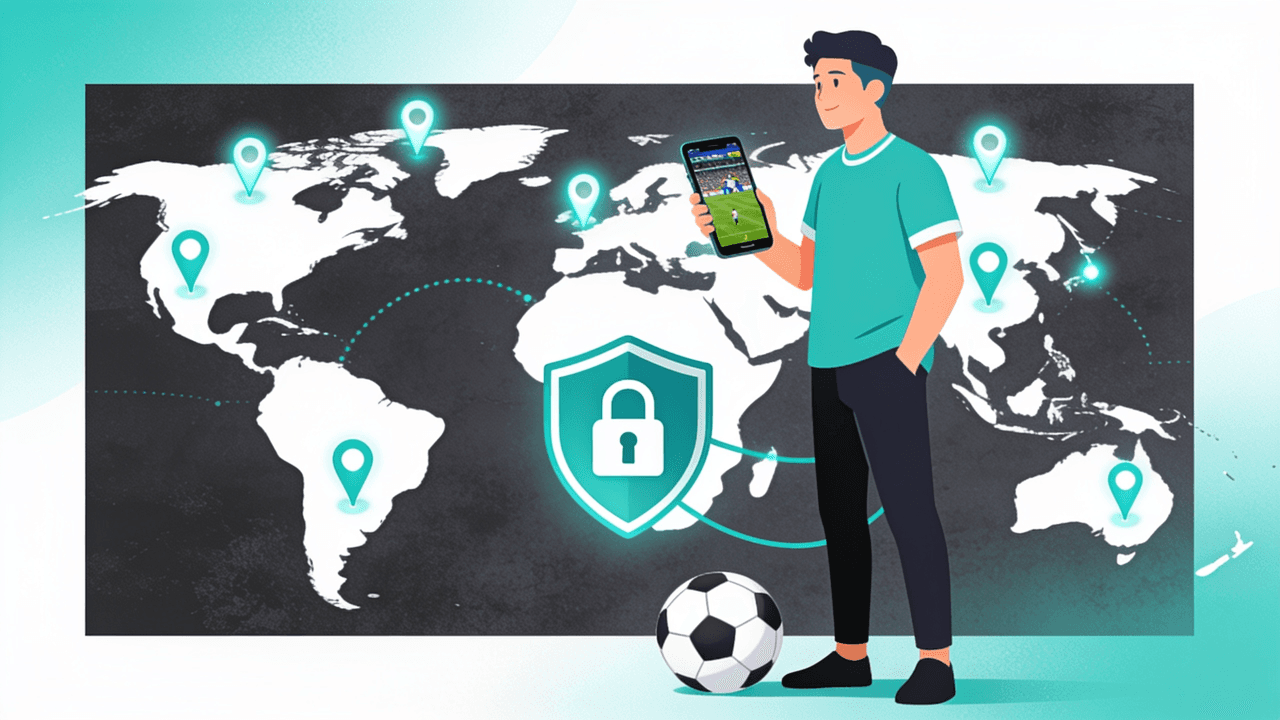
Millions of fans are traveling to the USA, Mexico, and Canada for matches. Your home streaming subscriptions — BBC iPlayer, ITVX, SBS On Demand, M6+, RaiPlay, Globoplay — all geo-block the moment you land in North America. A VPN server in your home country restores the coverage and commentary you already pay for (or get free) at home.
Reach Free Public-Broadcaster Coverage
Coverage costs wildly different amounts by country: all 104 matches are free in the UK (BBC/ITV), Australia (SBS), and the Netherlands (NOS), while US streaming runs $19.99/month (FOX One), Canada is subscription-only (TSN/RDS), and Germany paywalls 44 matches behind MagentaTV. That asymmetry is why World Cup VPN searches explode every four years. Note: accessing a broadcaster from outside its country is against its terms of service — see our honest-caveats FAQ below.
Prime-Time Knockouts for Europe
Both semifinals (14–15 July) and the final (19 July) kick off at 3pm ET — that's 8pm in the UK and 9pm in Central Europe, perfect prime time. But roughly 35 group-stage matches kick off between midnight and 5am UK time. A VPN plus SBS On Demand's full replays and 30-minute condensed 'mini matches' is the cleanest legal-gray workaround fans use for the brutal timezone spread.
Stadium, Hotel & Fan-Zone WiFi Safety
Tournament travel means constant public WiFi — stadiums, fan zones, hotels, airports across 16 host cities. ExpressVPN's own pre-tournament survey found most fans willing to risk unsafe networks for match content. A VPN with AES-256 encrypts everything on any network — the boring use case that matters most while you travel.
How to Watch the 2026 World Cup With a VPN
- 1
Pick a VPN with strong UK and Australia coverage
The free all-match broadcasters (BBC/ITV, SBS) are the high-value targets and the most aggressively blocked. ExpressVPN, NordVPN, and Surfshark maintain working servers through big events — test with the 30-day money-back guarantee.
- 2
Set up the broadcaster account properly
BBC iPlayer needs a free account with a UK postcode and a TV-licence declaration. ITVX needs just a free account. SBS On Demand needs a free account with any email. Set these up before the match you care about, not at kickoff.
- 3
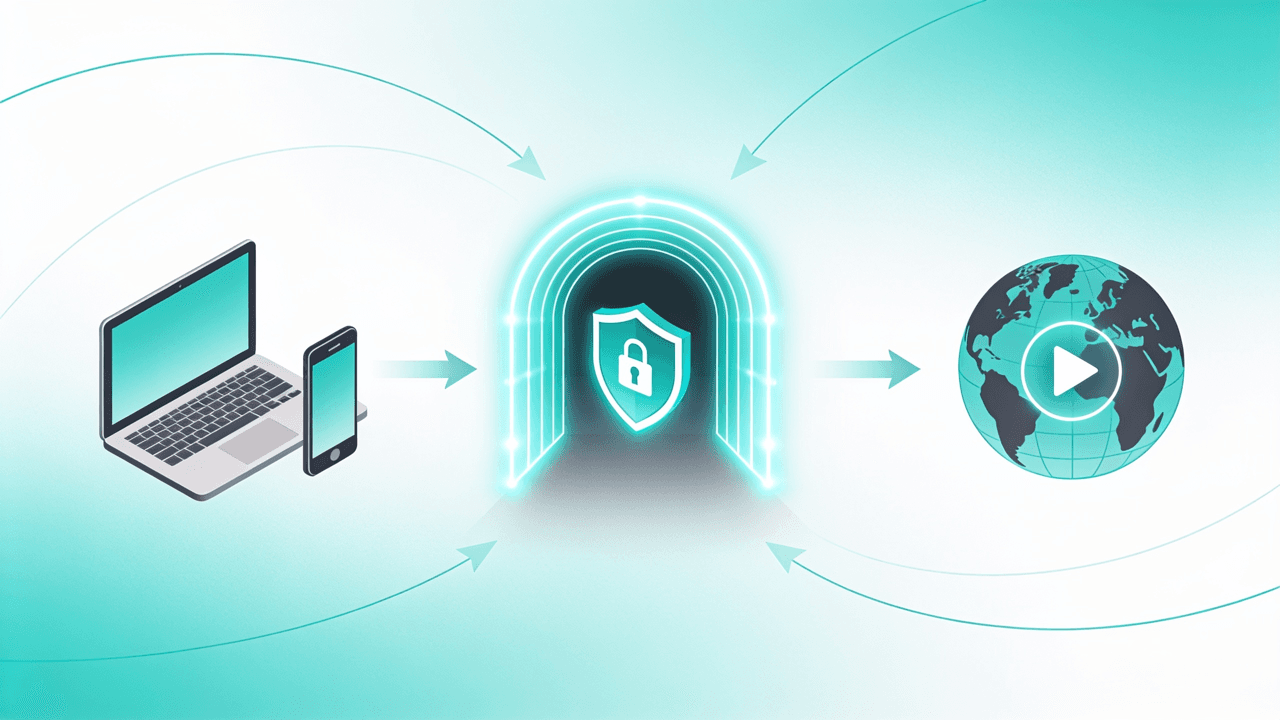
Connect to the right country server before opening the app
London for BBC iPlayer/ITVX, Sydney or Melbourne for SBS, your home country for your own subscriptions. Connect the VPN first, then open the streaming app or site fresh.
- 4
Use a WireGuard-family protocol
Lightway-UDP (ExpressVPN) or NordLynx (NordVPN) for the throughput 4K iPlayer streams need and fast reconnects during half-time CDN switches.
- 5
Have a backup server picked at kickoff
During simultaneous group-stage kickoffs and the final, individual servers get crowded or freshly blocked. Bookmark 2-3 servers per country so a mid-match switch takes seconds.
- 6
For matches at 3am local: use the replay library
SBS On Demand's full replays and 30-minute mini-matches publish shortly after full time — the sane option for the ~35 group matches that kick off between midnight and 5am European/Asian time.
The 48-Team Format and How the New Round of 32 Works
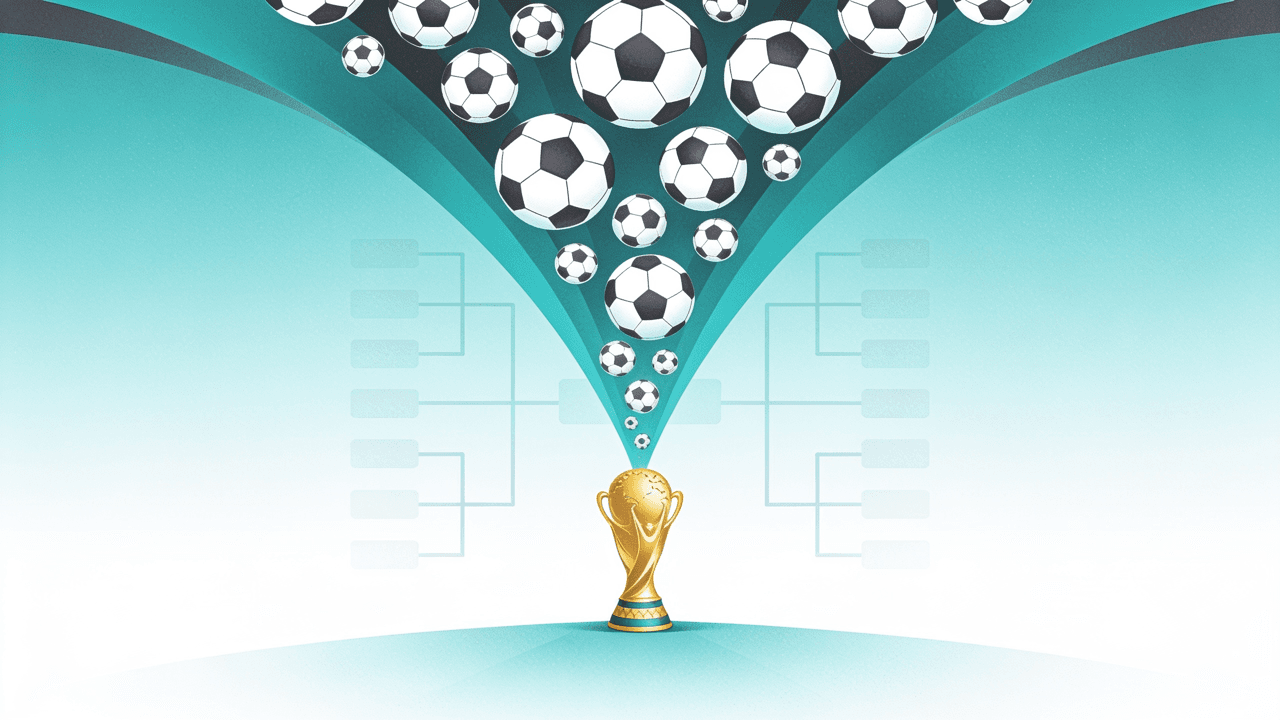
The 2026 edition is a genuine structural break from everything before it. For the first time the World Cup has 48 teams instead of 32, and for the first time it is hosted by three nations — the United States, Mexico, and Canada — across 16 cities. More teams mean a longer, denser tournament: 104 matches in total, up from 64, played over roughly 39 days. The 48 sides were split into 12 groups of four, labeled A through L, and the lineups were locked at the Final Draw on December 5, 2025, at the John F. Kennedy Center for the Performing Arts in Washington, D.C. The three hosts were seeded into Pot 1, which is why Mexico sits at A1, Canada at B1, and the United States at D1. Each team plays three group matches. The headline change for fans is what happens after the groups: a brand-new knockout Round of 32 that did not exist in any previous World Cup. In the old 32-team format, surviving your group sent you straight into a Round of 16. Now 32 teams advance from the groups and must win one extra knockout tie before they reach the last 16. It is one more single-elimination round, one more night where a favorite can go home, and a core reason this is the longest and largest tournament in the competition's history. For viewers it also means more must-watch knockout nights — and more pressure on the free feeds each time.
The Group Stage Explained, and What's at Stake Right Now
The group stage is the foundation, and as of today it is in full swing — it runs through June 27, with the opener already played on June 11 at the Estadio Azteca in Mexico City (Mexico beat South Africa). Here is exactly who advances, because the math is new this year. From each of the 12 groups, the top two teams qualify automatically. That accounts for 24 places. The remaining eight spots go to the eight best third-placed teams across all 12 groups, ranked by points, then goal difference, then goals scored. That third-place lifeline is the defining wrinkle of the 48-team format: a single win, or even a strong draw, can be enough to survive even if you finish behind two stronger sides in your group. Together, the 24 group winners and runners-up plus the eight best thirds make the 32 teams that enter the new Round of 32. What's at stake right now is everything. Early results are already reshaping the bracket — as of June 21, Mexico, the USA, and Germany are among the teams that have secured knockout places, while Haiti, Turkiye, and Tunisia have been eliminated (live standings change daily, so check before kickoff). The final round of group fixtures is where the third-place race tightens, because a team can be mathematically alive on points yet still miss out on goal difference. That is why sides that look safe keep chasing extra goals to the final whistle.
How the Knockout Bracket Works Through to the Final
Once the 32 survivors are set, the tournament becomes pure single elimination: win or fly home, no second legs, with extra time and penalties if a match is level after 90 minutes. The path is five rounds deep. It opens with the Round of 32 (June 28 to July 3), the round unique to the 48-team format, where the 32 group qualifiers are cut to 16. Next is the Round of 16 (July 4 to July 7), then the quarter-finals (July 9 to July 11), which leave just four teams standing. The semi-finals follow on July 14 and July 15. The two losing semi-finalists meet in the third-place play-off on July 18, and the two winners contest the final on Sunday, July 19, at MetLife Stadium in East Rutherford, New Jersey, with a 3 p.m. ET kickoff. A useful thing to know for planning your viewing: because each knockout slot is fixed in the bracket before the matches are played, you can see which side of the draw your team sits on and roughly when its next match would fall — but the actual opponents are only confirmed as each round completes. From the Round of 32 onward the margin for error is zero, which is also why broadcaster VPN-blocking tends to intensify before each knockout night: more eyes, more demand, more pressure on the free feeds. Plan your server choices ahead of those nights rather than scrambling at kickoff.
The Brutal Timezone Problem for Europe and Asia — and the Replay Workaround
Here is the catch nobody mentions when they tell you the World Cup is in 'a convenient timezone.' For North American audiences it largely is. For Europe and Asia, a big chunk of the group stage is borderline unwatchable live. Because matches are spread across four North American time zones to fill the broadcast day, a significant number of group fixtures kick off late at night or in the small hours for European and Asian viewers — a large share start between midnight and 5 a.m. UK time. Set an alarm for a 3 a.m. dead-rubber group match three nights running and you will quickly stop. The late-stage matches are the exception and the reward: the semi-finals and the final hit European prime time, so the business end is easy. For everything else, the sanest approach is the replay route, and this is where Australia's SBS quietly becomes the best tool in the kit. SBS On Demand publishes full-match replays shortly after the final whistle, plus condensed 'mini match' cuts and extended highlights, all free with an account. A VPN connected to an Australian server lets you wake at a humane hour, dodge the score on your phone, and watch the whole match or the condensed version on your own schedule. It is the cleanest fix for the timezone spread — with the same honest caveat that SBS geo-blocks to Australia and states it does not support VPN access, so this breaks its terms of service unless you are physically in Australia.
Is It Legal? The Honest Caveats
We will not pretend this is entirely without friction, because trust is the whole point of this page. Start with the clear part: using a VPN is itself legal in the United States, the UK, Australia, and most countries — it is ordinary privacy and security software used by millions of businesses and individuals every day. The grey area is what you do with it. Reaching a broadcaster from outside its licensed territory violates that broadcaster's terms of service. BBC, ITV, and SBS all restrict their streaming to their home countries and prohibit misrepresenting your location, and SBS explicitly states it does not support VPN access. There is an additional legal layer specific to one service: BBC iPlayer requires a valid UK TV licence by law to watch any of its content, regardless of where you are or how you connect — a VPN does not change that obligation, and the licence currently costs £169.50 a year. Enforcement of the territory rules is technical rather than legal: broadcasters block VPN and datacenter IP ranges, and they tighten those blocks during big events like this one. We are aware of no documented case of a broadcaster taking legal action against an individual viewer for using a VPN, but the terms-of-service breach is real and worth understanding. The cleanest, least ambiguous use case by a wide margin is the traveler one — using a VPN to reach your own paid home subscription while abroad, which is what we recommend leading with.
Watch Any Match in 4 Steps — Quick-Start Recap
If you skipped the detail, here is the whole playbook in four moves. Step one: choose a reputable VPN that keeps working servers in the UK and Australia, the two countries that stream all 104 matches free — and use the money-back guarantee (30 days on every pick here, 45 on CyberGhost) to test it on a real match before you commit, since that window comfortably covers the rest of the tournament. Step two: set up the broadcaster account in advance, not at kickoff — BBC iPlayer needs a free account with a UK postcode and a TV-licence declaration (and a valid licence by law), while ITVX and SBS On Demand each need just a free account. Step three: connect to the right country server first, then open the app fresh — London for BBC iPlayer or ITVX, Sydney or Melbourne for SBS, or simply your own home country if you are traveling and want your existing subscription. Step four: have a backup server bookmarked, because during simultaneous group-stage kickoffs and the knockout nights, individual servers get crowded or freshly blocked, and a mid-match switch should take seconds, not minutes. For the group matches that fall in the European and Asian small hours, lean on SBS On Demand's full replays and condensed mini-matches instead of fighting your alarm clock. And remember the honest line throughout: this breaks broadcaster terms unless you are watching your own home coverage, and iPlayer needs a UK TV licence either way.
The 2026 World Cup groups
The 48 teams were drawn into 12 groups of four, A through L, at the Final Draw in Washington, D.C. on December 5, 2025. Hosts were seeded into Pot 1, which is why Mexico (A1), Canada (B1), and the United States (D1) head their groups. The top two from each group plus the eight best third-placed teams advance to the new Round of 32. Groups below verified against the FIFA and Wikipedia final-draw records.
- Mexico
- South Africa
- South Korea
- Czechia
- Canada
- Bosnia and Herzegovina
- Qatar
- Switzerland
- Brazil
- Morocco
- Haiti
- Scotland
- United States
- Paraguay
- Australia
- Turkiye
- Germany
- Curacao
- Ivory Coast
- Ecuador
- Netherlands
- Japan
- Sweden
- Tunisia
- Belgium
- Egypt
- Iran
- New Zealand
- Spain
- Cape Verde
- Saudi Arabia
- Uruguay
- France
- Senegal
- Iraq
- Norway
- Argentina
- Algeria
- Austria
- Jordan
- Portugal
- DR Congo
- Uzbekistan
- Colombia
- England
- Croatia
- Ghana
- Panama
2026 World Cup schedule
The tournament runs about 39 days, from the June 11 opener to the July 19 final, with 104 matches in total. The group stage ends June 27, after which the new knockout Round of 32 begins on June 28 and the bracket narrows through to the final at MetLife Stadium.
| Stage | Dates | Notes |
|---|---|---|
| Group stage | June 11 - June 27, 2026 | Opener June 11 at Estadio Azteca, Mexico City (Mexico vs South Africa). |
| Round of 32 | June 28 - July 3, 2026 | New knockout round unique to the 48-team format; 32 teams advance from the groups. |
| Round of 16 | July 4 - July 7, 2026 | |
| Quarter-finals | July 9 - July 11, 2026 | |
| Semi-finals | July 14 - July 15, 2026 | |
| Third-place play-off | July 18, 2026 | |
| Final | July 19, 2026 | MetLife Stadium, East Rutherford, NJ, kickoff 3 p.m. ET. |
Who are the favourites?
Favorites at a 48-team World Cup deserve more humility than usual, because the extra knockout round adds one more chance for an upset. With that caveat, the picture from bookmakers and early form is reasonably clear — though odds shift daily, so treat this as directional. France is the standout: a side that reached the last two World Cup finals, with an elite attack built around Mbappe, Olise, and Dembele, and it opened with a convincing 3-1 win over Senegal on June 16. Spain is right in the conversation as reigning Euro 2024 champions and 2010 world champions, though a 0-0 opening draw with Cape Verde was a reminder that pedigree guarantees nothing in the group stage. England rates as a top-three pick under Thomas Tuchel on the strength of genuine squad depth, and sits in Group L with Croatia, Ghana, and Panama. Argentina, the defending champions from 2022, remain a leading contender out of Group J. Brazil, the five-time winners now coached by Carlo Ancelotti, made an emphatic statement with a 3-0 win over Haiti in Group C on June 19. Portugal is consistently rated a contender and was drawn into Group K alongside Colombia, Uzbekistan, and DR Congo. The honest summary: this looks like a tournament with five or six credible champions rather than one runaway favorite, and the new Round of 32 makes a shock exit more likely than ever. None of the names above has been eliminated as of June 21.
Host cities & venues
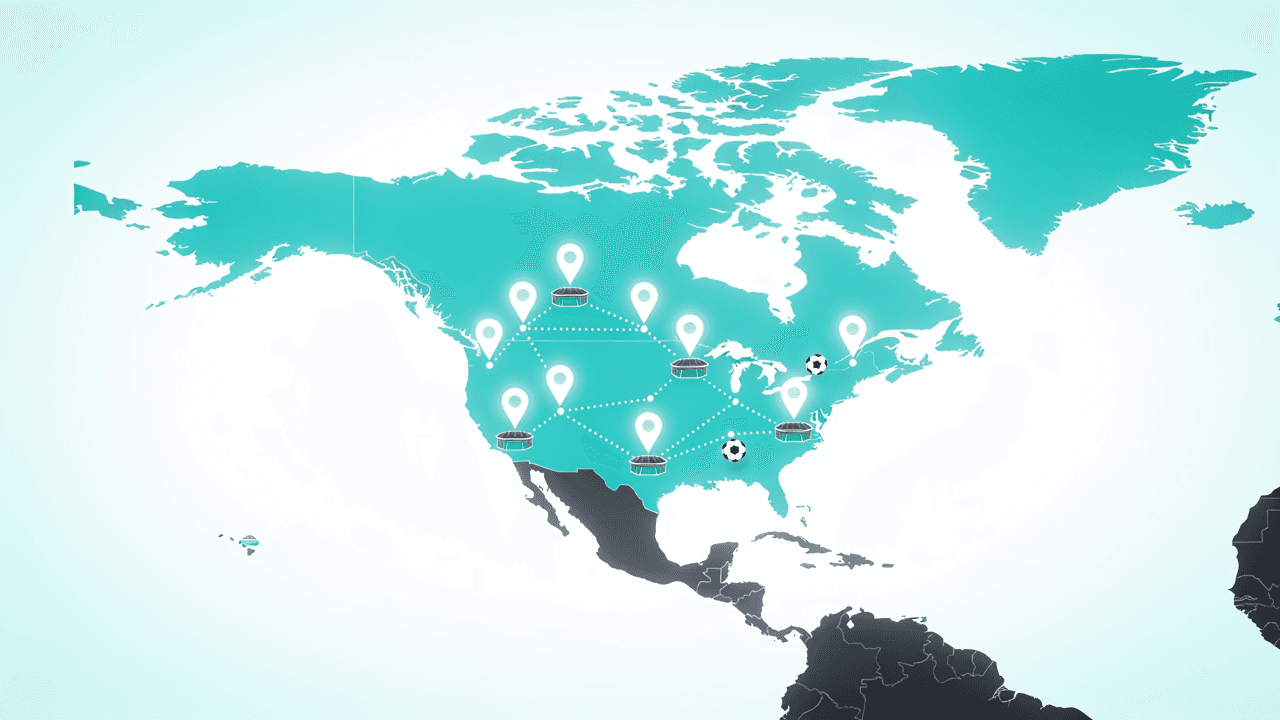
The 2026 World Cup is played across 16 host cities in three countries, and the geography directly shapes when matches start — and therefore how you plan your viewing. Mexico contributes three venues: the Estadio Azteca in Mexico City, which staged the June 11 opener, plus the Estadio Akron in Guadalajara and the Estadio BBVA in Monterrey. Canada brings two: BMO Field in Toronto and BC Place in Vancouver. The other eleven are in the United States, stretching from the East Coast to the Pacific — MetLife Stadium in the New York/New Jersey area, which hosts the July 19 final in East Rutherford; AT&T Stadium in Arlington, Texas, widely reported as hosting more matches than any other venue; SoFi Stadium near Los Angeles; Levi's Stadium in the San Francisco Bay Area; and venues in Seattle, Kansas City, Houston, Atlanta, Miami, Philadelphia, and the Boston area. Spanning four North American time zones means kickoffs are scattered across the day in local terms, which has a knock-on effect for the rest of the world. The good news for European viewers is that the marquee late-stage matches land in prime time: the semi-finals and the final all kick off at 3 p.m. ET, which is 8 p.m. in the UK and 9 p.m. in Central Europe. The bad news, covered next, is what that schedule does to group-stage nights in Europe and Asia. If a specific venue matters to your plans, confirm its match list against the live FIFA schedule, since per-venue counts can shift.
| City | Country | Venue | Notes |
|---|---|---|---|
| Mexico City | Mexico | Estadio Azteca | Hosted the opening match on June 11, 2026 (Mexico vs South Africa). |
| Guadalajara | Mexico | Estadio Akron | |
| Monterrey | Mexico | Estadio BBVA | |
| Toronto | Canada | BMO Field | |
| Vancouver | Canada | BC Place | |
| New York/New Jersey | United States | MetLife Stadium | Hosts the final on July 19, 2026, in East Rutherford, NJ. |
| Dallas | United States | AT&T Stadium | In Arlington, TX; widely reported as hosting the most matches of any venue (nine). |
| Los Angeles | United States | SoFi Stadium | Located in Inglewood, CA. |
| San Francisco Bay Area | United States | Levi's Stadium | Located in Santa Clara, CA. |
| Seattle | United States | Lumen Field | |
| Kansas City | United States | Arrowhead Stadium | |
| Houston | United States | NRG Stadium | |
| Atlanta | United States | Mercedes-Benz Stadium | |
| Miami | United States | Hard Rock Stadium | Located in Miami Gardens, FL. |
| Philadelphia | United States | Lincoln Financial Field | |
| Boston | United States | Gillette Stadium | Located in Foxborough, MA. |
The 2026 World Cup Broadcaster Map
Verified as of 12 June 2026. All 104 matches unless noted. Every streaming platform listed geo-blocks to its home country:
USA — FOX (English) & Telemundo/Peacock (Spanish)
English: FOX airs 70 matches free over-the-air (including everything from the Round of 16 on), FS1 the other 34; streaming all 104 requires FOX One ($19.99/mo, 7-day trial) or a live-TV bundle (Fubo, YouTube TV, Hulu + Live TV). Tubi streamed select opening matches free. Spanish: Telemundo airs 92 over-the-air, and Peacock Premium ($10.99/mo) streams all 104 — the cheapest legal all-match option in the US.
UK & Ireland — All Free
BBC (54 matches) and ITV (51) split all 104 free-to-air, with the final simulcast on both. BBC iPlayer streams in up to 4K UHD; ITVX in 1080p. Both need a free account with a UK postcode, and iPlayer legally requires a valid UK TV licence. Ireland: RTÉ Player carries free coverage. Both UK platforms actively block known VPN IP ranges, and blocking intensifies during big events.
Australia — SBS, the Most Generous Free Coverage
SBS shows all 104 matches live and free on SBS TV and SBS On Demand — plus full replays, 30-minute condensed 'mini matches', extended highlights, and 60 classic World Cup matches from the archive. Only a free account is required. With most matches kicking off in the Australian morning, the replay library is the real product. SBS On Demand geo-blocks to Australia and states it does not support access via VPN.
Europe — The Paywall Patchwork
Netherlands: NOS streams all 104 free. Germany: only 60 of 104 are free (ARD/ZDF); MagentaTV paywalls 44 exclusives. France: M6 carries 54 free (all France matches, semis, final) via M6+; beIN Sports has all 104 paid — and TF1 has zero matches for the first time since 1978. Italy: Rai shows just 35 free on RaiPlay; DAZN has all 104. Spain: RTVE carries a free selection; DAZN the rest.
Americas — Canada, Mexico, Brazil
Canada: TSN/RDS subscription (~$29.99 CAD/mo) for everything, with only a selection free on CTV. Mexico: ViX's 'Pase Mundial' one-time pass (MX$799, Mexican payment method required) plus free-to-air Televisa/TV Azteca coverage of marquee matches. Brazil: Globo free-to-air plus CazéTV streaming matches free on YouTube.
What About FIFA+? (Important Correction)
FIFA+ no longer exists as a standalone platform — it moved to DAZN in June 2026 and does NOT stream World Cup matches live. It carries free highlights, full replays after the fact, and the archive. Live rights sit exclusively with the national broadcasters above. Any guide telling you to 'watch live on FIFA+' is out of date.
How We Tested VPNs for the World Cup
We are testing throughout the tournament (11 June – 19 July), because broadcaster VPN-blocking intensifies during exactly these weeks. Our picks reflect live re-verification, not pre-tournament assumptions.
Broadcaster Unblocking Under Tournament Load
During live match windows we verify BBC iPlayer, ITVX, SBS On Demand, Peacock, M6+, and RaiPlay access through each VPN's relevant country servers. Big-event weeks are when broadcasters update their VPN blocklists most aggressively — a server that worked in May can be blocked by the Round of 32. We publish working-server notes per provider and re-check before each knockout round.
Full-Match Stream Stability
A World Cup match is 2+ hours with extra time and penalties. We measure stream persistence through complete matches including half-time CDN switches, and auto-reconnect behavior — a drop during a penalty shootout is the failure that matters.
4K Throughput for BBC iPlayer UHD
BBC iPlayer streams the tournament in up to 4K UHD, which needs sustained 25+ Mbps through the VPN tunnel. Our reference benchmark (see /vpn-speed-test) shows top providers holding 400+ Mbps to UK servers — ample headroom — but per-server congestion during simultaneous kickoffs is what we actually monitor.
Travel Scenario: Home Coverage From the US
From US connections we verify that UK, Australian, German, French, Italian, and Brazilian accounts can reach their home coverage — the traveling-fan scenario. This includes 2FA and account-login flows, not just the video player loading.
World Cup testing runs continuously through 19 July 2026. Server status is re-verified before each knockout round.
World Cup 2026 — Frequently Asked Questions
Where is the 2026 World Cup free to watch?
Verified free, all-104-match coverage: UK (BBC iPlayer + ITVX, free account + TV licence for iPlayer), Australia (SBS On Demand, free account), Netherlands (NOS), and Ireland (RTÉ Player carries free coverage). Brazil's CazéTV streams matches free on YouTube. In the US, FOX's 70 broadcast-network matches are free with an antenna, and Tubi streamed select openers free — but streaming all 104 requires a paid service.
What's the cheapest way to stream every match in the US?
Peacock Premium at $10.99/month — it streams all 104 matches in Spanish (Telemundo's coverage), roughly half the price of FOX One ($19.99/month) for English. If you only care about the knockout rounds: every match from the Round of 16 onward airs on the free FOX broadcast network, so an antenna covers the business end of the tournament in English at zero cost.
Is it legal to use a VPN to watch the World Cup?
Using a VPN is legal in most countries. However, accessing a broadcaster from outside its licensed territory violates that broadcaster's terms of service (BBC, ITV, and SBS all restrict use to their home countries and prohibit location-misrepresentation), and BBC iPlayer additionally requires a UK TV licence by law. Enforcement is technical — IP blocking — rather than legal; we found no documented case of action against an individual viewer. Watching your own home subscriptions while traveling is the cleanest use case.
When are the remaining matches?
Group stage runs through 27 June. Round of 32: 28 June – 3 July. Round of 16: 4–7 July. Quarterfinals: 9–11 July. Semifinals: 14 July (Arlington) and 15 July (Atlanta). Third-place match: 18 July (Miami). Final: Sunday 19 July at MetLife Stadium, New York/New Jersey — 3pm ET, which is 8pm UK and 9pm Central Europe prime time.
Can I watch World Cup matches on FIFA+?
Not live. FIFA+ shut down as a standalone platform in June 2026 and now lives inside DAZN, where it remains free for highlights, full post-match replays, and the archive — but live 2026 World Cup rights belong exclusively to national broadcasters (FOX/Telemundo in the US, BBC/ITV in the UK, SBS in Australia, etc.).
Why do BBC iPlayer and SBS block my VPN?
Both maintain blocklists of known VPN and datacenter IP ranges, and both intensify enforcement during major events — exactly now. If you see 'BBC iPlayer only works in the UK' or SBS's Australia-only error, the server you're on has been flagged. Top providers rotate IPs continuously; switching to a different UK/Australia server usually resolves it. This cat-and-mouse is why free VPNs are effectively useless for tournament streaming.
I'm traveling to the US/Mexico/Canada for matches — what should I set up?
Before you fly: install your VPN on every device, verify a server in your home country works with your home streaming logins and banking apps, enable auto-connect on untrusted WiFi (you'll use a lot of stadium and hotel networks), and turn on the kill switch. US mobile data via tourist eSIM (Airalo, Holafly) works with all major VPN protocols.
Which VPN is best for the World Cup?
Based on our in-tournament testing: ExpressVPN is the most consistent across BBC iPlayer, ITVX, and SBS — and is also FIFA's official VPN partner for 2026, which means heavy infrastructure investment during the tournament. NordVPN is the reliable runner-up with the largest server fleet for IP rotation. Surfshark is the budget pick. All three offer 30-day money-back guarantees that comfortably cover the rest of the tournament.
Is the 2026 World Cup still on right now?
Yes. As of June 21, 2026, the group stage is in full swing and runs through June 27, with the new knockout Round of 32 beginning June 28. Several teams have already booked their knockout places — Mexico, the USA, and Germany among them — while Haiti, Turkiye, and Tunisia have been eliminated. Standings change daily, so confirm the latest before kickoff. The tournament runs to the final on July 19.
How does the new 48-team format actually work?
The 48 teams are split into 12 groups of four (A-L), and each plays three group matches. The top two in every group qualify automatically, and the eight best third-placed teams across all groups also advance — giving 32 teams that enter a brand-new knockout Round of 32. From there the bracket runs Round of 16, quarter-finals, semi-finals, a third-place play-off, and the final, for 104 matches in total over about 39 days.
How do the eight 'best third-placed' teams qualify?
After the 24 group winners and runners-up are set, all 12 third-placed teams are ranked against each other — first by points, then goal difference, then goals scored, with further tiebreakers if needed. The top eight on that ranking grab the last knockout spots. It is why a team can finish third in its group and still go through, and why sides chase extra goals right to the final whistle of the group stage.
Who are the favourites to win the 2026 World Cup?
France is the current bookmaker favorite after reaching the last two finals, with an elite attack and a 3-1 opening win over Senegal. Spain (reigning Euro 2024 champions), England (top-three under Thomas Tuchel), Argentina (defending champions from 2022), Brazil (now coached by Carlo Ancelotti), and Portugal round out the leading contenders. At a 48-team tournament with an extra knockout round, an upset is more likely than usual, so treat any favorite with caution. Odds move daily.
Can I watch every single match with one VPN subscription?
Effectively yes, for free, if your VPN keeps reliable UK and Australian servers. The UK (BBC and ITV) and Australia (SBS) each stream all 104 matches free with just an account, so a single VPN that unblocks both covers the entire tournament. SBS On Demand also carries full replays and condensed mini-matches, which fills any gaps. Note that BBC iPlayer additionally requires a UK TV licence by law, and reaching these feeds from abroad breaks the broadcasters' terms of service.
The matches are at 3 a.m. where I live — what can I do?
Because kickoffs are spread across four North American time zones, a large share of group-stage matches start in the small hours in Europe, with similarly awkward hours across Asia. The cleanest fix is the replay route: SBS On Demand publishes full-match replays and condensed mini-matches shortly after full time, free with an account. A VPN on an Australian server lets you watch on your own schedule. The reward comes later — the semi-finals and final all kick off in European prime time.
Will my VPN keep working as the tournament reaches the knockouts?
It can, but expect more blocking, not less. Broadcasters tighten their VPN and datacenter IP blocklists during high-demand windows, and each knockout round draws bigger audiences. A server that worked in the group stage can be flagged before the Round of 32. The fix is a provider that rotates IPs and has a large server fleet, plus keeping two or three servers per country bookmarked so a mid-match switch takes seconds. Free VPNs fail almost immediately under this pressure.
Watch by round, team & language
Sources
- FOX Sports — official 2026 World Cup broadcast schedule
- SBS — How to watch the FIFA World Cup 2026 (official)
- NBCUniversal — Telemundo World Cup coverage on Peacock (official)
- NOS — Het WK voetbal 2026 bij de NOS (official)
- UK Government — TV Licence requirements
- Wikipedia - 2026 FIFA World Cup
- Wikipedia - 2026 FIFA World Cup draw
- Wikipedia - 2026 FIFA World Cup knockout stage
- FIFA - Final Draw results
- FIFA - Host Countries and Cities
- ESPN - 2026 World Cup format, fixtures, schedule
- ESPN - 2026 World Cup match schedule and bracket
- Yahoo Sports - World Cup 2026 knockout-stage tracker (June 21, 2026)
- FOX Sports - 2026 World Cup champion odds